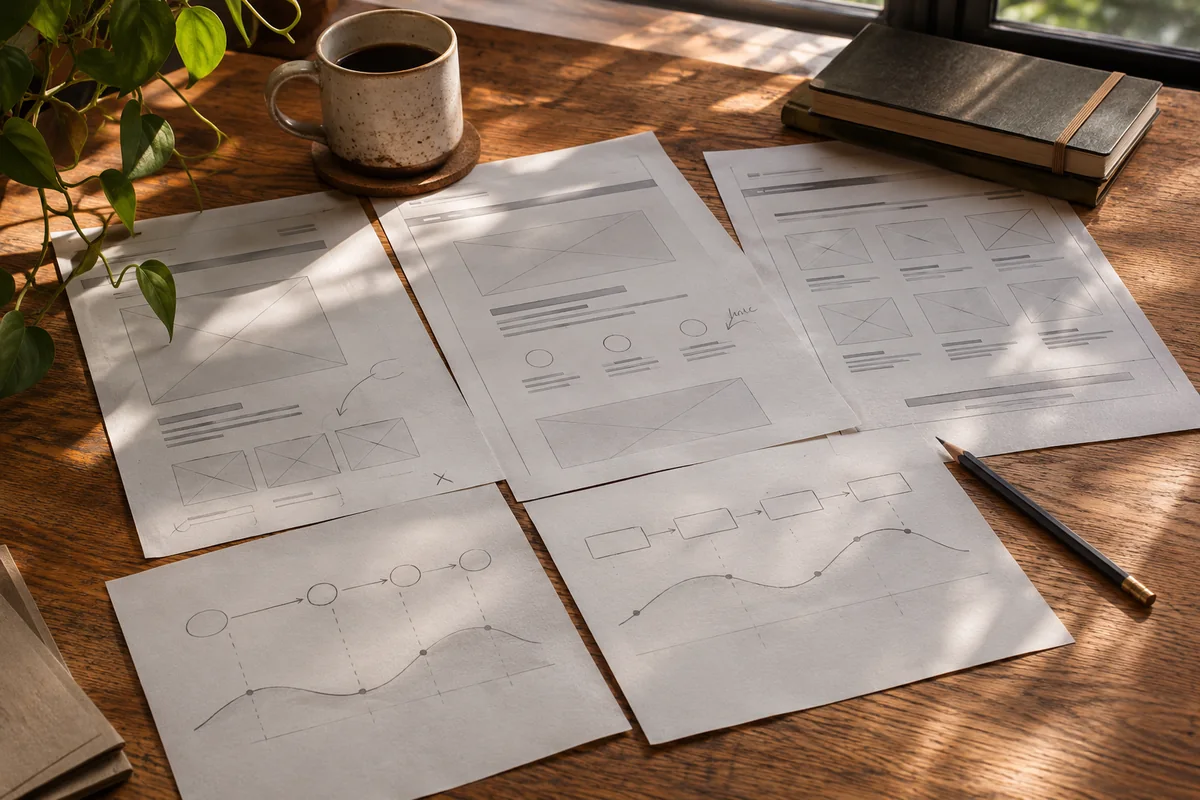

That is why a before-and-after sample should explain what the edit is trying to improve. Otherwise the reader sees a preference presented as a result.
Consider this invented example:
Before: “Our platform provides comprehensive capabilities for teams seeking enhanced operational visibility.”
After: “See which jobs are waiting, who owns them, and what needs attention next.”
The second line is more concrete. It is only a valid rewrite if the platform actually provides those views.
Explain the editorial decision
The change replaces a broad category of benefit with information a reader can picture. It also implies product behaviour that requires confirmation.
That is the important part of the example. Shorter is not automatically more accurate.
A responsible rewrite preserves necessary qualifications. If a feature works only on a certain plan, the improved sentence cannot quietly remove the boundary to sound more direct.
Use real material with permission
A client’s original draft may be private. Before publishing a comparison, establish whether the material can be shown and whether the attribution is appropriate.
Invented examples are useful for teaching an editing principle. They should be labelled so nobody mistakes them for client work or measured outcomes.
The best before-and-after tells the reader why the change helps and what still needs checking. That is more revealing than a dramatic transformation with no explanation underneath it.

Jaydeep Baldaniya
Content writer. Writing professionally since 2016. English, Hindi, and Gujarati.
Editorial note: hypothetical examples are used to explain writing decisions. They are not client quotations or measured project results.